Your first decision in crypto mining dictates your hardware, electricity costs, and potential returns. For newcomers, the primary choice lies between two techniques: Proof of Work (PoW) and Proof of Stake (PoS). PoW, the original method for currencies like Bitcoin, requires solving complex mathematical puzzles using computational power. This process, known as hashing, consumes significant electricity but secures the network by validating transactions. In contrast, PoS, used by Ethereum and others, validates transactions based on the amount of currency a user “stakes” or locks up as collateral. It’s far less energy-intensive, making it a more accessible entry point for a beginner.
This introduction to mining fundamentals is incomplete without addressing hardware. For PoW, Application-Specific Integrated Circuits (ASICs) dominate Bitcoin mining, offering unparalleled hashing power but at a high initial cost and noise level. A single ASIC miner can consume over 3,000 watts, similar to a household immersion heater. Graphics Processing Units (GPUs) provide more flexibility for mining alternative cryptocurrencies, but their profitability is highly sensitive to the digital asset’s market price and network difficulty. Your location’s electricity tariff, measured in pence per kilowatt-hour (kWh), is a non-negotiable data point; if your rate is above 20p/kWh, most PoW mining becomes financially unviable in the UK.
Mastering these digital currency techniques requires a data-driven approach before any hardware purchase. Use online profitability calculators, inputting your specific hardware’s hash rate and local electricity cost, to model potential earnings. Joining a mining pool is an essential step for a starter, as it combines your hashing power with other miners to increase the frequency of earning block rewards, which are then shared among participants. This guide will dissect these methods, providing a clear path from understanding the core concepts to executing a calculated first step into cryptocurrency mining.
Choosing Your Mining Hardware
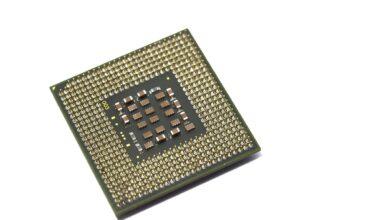
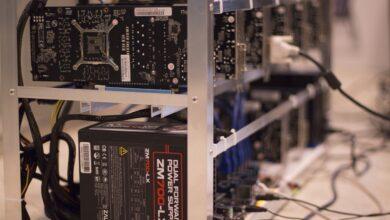
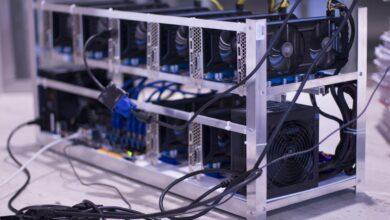
For a beginner, your hardware choice dictates your entire mining operation. The three core options are CPUs, GPUs, and ASICs, each with distinct trade-offs. CPUs, the processor in your everyday computer, are largely obsolete for serious mining; their hash rates are too low for any major digital currency. GPUs, or graphics cards, offer a solid middle ground. A rig built with multiple GPUs, like NVIDIA’s RTX 3070 or AMD’s RX 6800, provides the flexibility to mine various cryptocurrencies such as Ethereum Classic or Ravencoin, making them a popular starter choice for newcomers learning the fundamentals.
ASIC miners represent the professional tier. These are machines designed for a single purpose: mining a specific cryptocurrency using a particular algorithm. An Antminer S19j Pro, for example, is engineered for the SHA-256 algorithm used by Bitcoin. It will vastly outperform a warehouse full of GPUs for that specific task but is useless for any other mining technique. This lack of flexibility is the primary trade-off; your investment is tied to one cryptocurrency’s success.
Your final decision hinges on your budget and target coin. A basic GPU setup can cost £2,000-£4,000 for a profitable multi-card rig. A new ASIC miner carries a similar or higher price tag but delivers unmatched power for its designated algorithm. Before purchasing, use online calculators like WhatToMine. Input your hardware’s power consumption, your local electricity cost in pence per kWh, and the current network difficulty. This data-driven analysis is non-negotiable; it reveals whether your operation will be profitable or simply a high-cost hobby.
Installing Mining Software
Download CGMiner or EasyMiner for your first setup; these programs offer a direct introduction to the mining process without overwhelming newcomers. Your choice hinges on the hardware selected in the previous step; GPU miners typically use software like CGMiner or BFGMiner, while ASIC devices often have manufacturer-provided applications. This step transforms your hardware from a passive component into an active participant in the digital currency network.
Configuration is the critical phase where you define the mining pool’s address, your worker username, and password. A common mistake for a beginner is entering the pool URL incorrectly; double-check this data against the pool’s official guide. These connection details are the essential link that allows your computer to contribute its calculated work and receive a share of the cryptocurrency rewards.
Fine-tuning settings like intensity and fan control can significantly impact your hardware’s output and longevity. For a starter, using default settings is safe, but as you progress, adjusting the intensity in CGMiner from a default of 8 to a higher value like 12 can increase hash rate at the cost of higher temperatures. Monitoring tools within the software provide real-time data on your hash rate, accepted shares, and hardware temperature, forming the fundamentals of sustainable operation.
Run the executable file as an administrator to initiate the mining process, watching the console for connection confirmation and share acceptance messages. A stable connection will show a continuous stream of new work requests and accepted shares, while errors will be displayed in red. This immediate feedback is invaluable for troubleshooting network issues or incorrect configuration, completing the core setup for your digital mining operation.
Joining a Mining Pool
Choose a pool based on its reward distribution method, not just its size. Pools like Slush Pool (which uses the Score method) or those offering PPLNS (Pay Per Last N Shares) protect you from pool hopping and better reflect your actual contribution over time. Look for a pool with servers geographically close to you to minimise latency; a ping under 50ms is a solid target. Your hardware’s hash rate determines your share of the rewards, so a precise calculation of your potential earnings, minus the pool’s fee (typically 1-3%), is your first step before committing.
The core mechanics involve your mining rig working on small, manageable segments of a block, called shares. The pool combines the computational power of all participants, increasing the frequency of finding a full block and earning the block reward. This system transforms the highly variable nature of solo mining into a steadier, more predictable stream of income, a fundamental shift for any newcomer’s strategy. This collaborative approach is a core part of modern crypto mining fundamentals, making the process viable for those without vast, industrial-scale setups.
Configure your mining software to connect to the pool’s server using a stratum protocol address. This address, along with your worker username and password, is entered directly into your mining software’s configuration file. Consistent submission of valid shares is critical; any downtime or hardware instability directly impacts your slice of the next reward. Monitoring your worker’s status on the pool’s dashboard provides real-time data on your accepted shares and any rejected ones, allowing for immediate troubleshooting of your setup.