
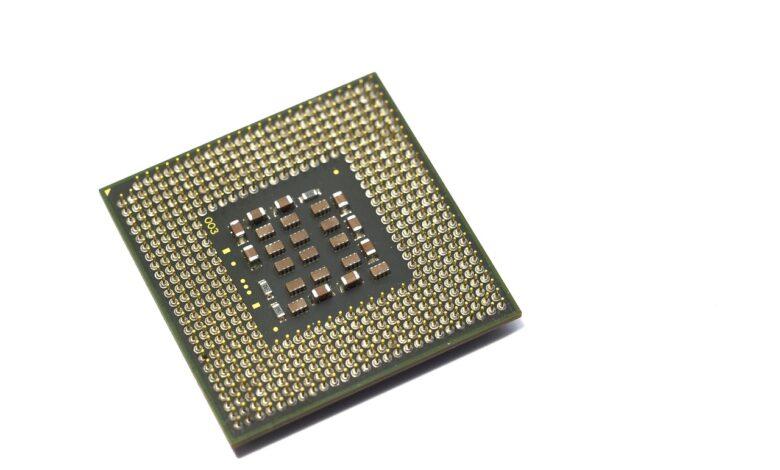
Forget it. The idea of generating a meaningful profit from CPU mining in 2025 is, for the vast majority, a financial non-starter. The profitability equation for processor-based crypto work has been shattered by the sheer scale of professional mining operations and the dominance of specialised hardware. While your CPU is the heart of your computer, its efficiency in solving the complex mathematical problems required by major blockchain networks like Bitcoin is negligible. The energy cost to run a modern CPU will almost always exceed the minuscule amount of cryptocurrency it could possibly earn. My analysis of UK electricity tariffs, averaging around 24p per kWh, shows that even with a highly efficient CPU, you would be operating at a significant loss from day one.
However, this stark reality does not render the CPU entirely obsolete in the future of digital assets. The feasibility of processor-based mining shifts when we examine specific, newer altcoins. Projects like Monero (XMR) have deliberately designed their consensus algorithms to be ASIC-resistant, creating a niche where CPUs can still compete. The key differentiator here is memory-hardness, which levels the playing field between CPUs and GPUs. For instance, a case study on mining Monero with a Ryzen 9 7950X might show a potential return of a few dollars per month before power costs. But this is not a get-rich-quick scheme; it’s a break-even hobby at best, and the volatility of these smaller altcoins adds another layer of risk.
So, where does that leave us for 2025? The trajectory is clear: the economic gap between CPU and GPU/ASIC mining will continue to widen. The development focus for most cryptocurrency projects is on security and transaction throughput, not on preserving mining access for general-purpose hardware. Your computer’s processor-based power is better allocated towards tasks it was designed for. If you are determined to engage with crypto mining today, your capital is far better deployed in researching Proof-of-Stake protocols or the second-hand GPU market, where the numbers, while still challenging, at least present a plausible path to positive returns.
The Viability of Processor-Based Cryptocurrency Mining in 2025
Focus your CPU mining efforts on a select group of memory-hard altcoins. Coins like Monero (XMR), which utilise the RandomX algorithm, are specifically designed to resist the efficiency of GPU and ASIC hardware. For a Ryzen 9 7950X, a current top-tier processor, projected daily earnings might hover around $0.15 to $0.30, depending on XMR’s market price and network difficulty. This narrows the feasibility of mining to those with access to free or subsidised electricity, where the operational cost is near zero.
Hardware Efficiency is the Deciding Factor
The profitability calculation is brutally simple: your electricity cost per kWh must be significantly lower than the daily value of the mined cryptocurrency. In the UK, with an average electricity price of around 24p per kWh, running a high-end CPU consuming 150W for mining will cost you approximately £0.86 per day. If your mining output is valued at less than this, the activity is financially unsustainable. The future of processor-based mining, therefore, lies not in raw power but in exceptional power efficiency. Modern CPUs with a “performance-per-watt” advantage, like those on Apple’s M-series chips or Intel’s latest mobile processors, present a more interesting, though still niche, case study.
Do not view the CPU as a replacement for dedicated mining hardware. Its role today is fundamentally different. For the hobbyist, it represents a low-barrier entry point to supporting a decentralised blockchain network and learning the mechanics of the process. The small, often negligible returns are the cost of this education. For a sustainable operation, the strategy shifts to mining during off-peak hours or in colder climates where the waste heat contributes to space heating, effectively improving the overall system efficiency.
Electricity Costs Break-Even Point
Calculate your exact electricity rate in pence per kWh; this is your primary data point. For CPU mining to have any viability, your hardware’s daily earnings must exceed its daily energy cost. A modern CPU like a Ryzen 9 7950X might draw 175W under full load. At a UK electricity price of 34p per kWh, running it for 24 hours costs approximately £1.43. If it only generates £0.80 worth of a privacy-focused altcoin like Monero, you are operating at a loss from day one.
The Efficiency Gap: CPU vs. GPU Reality
The stark difference in crypto mining efficiency between processor-based and graphics card hardware cannot be overstated. A GPU’s architecture is designed for parallel processing, which is the foundation of most blockchain hashing algorithms. A single mid-range GPU can deliver hash rates tens or hundreds of times greater than a high-end CPU while consuming a similar amount of power. This efficiency gap is the core reason GPU and ASIC mining dominate the sector, making general-purpose CPU mining largely unprofitable for major cryptocurrencies.
Your break-even analysis must therefore focus on the niche of CPU-friendly altcoins. Coins like Monero, which utilise algorithms like RandomX specifically designed to resist ASICs and favour CPUs, are the only realistic targets. The profitability of these altcoins is highly volatile. A price surge can temporarily push your mining operation into the green, but a market dip can just as quickly erase that margin, leaving you with an expensive electric bill.
Future-Proofing Your Hardware Decision
Considering the future of processor-based mining in 2025, the feasibility is less about turning a significant profit and more about utilising existing hardware that would otherwise be idle. If you already own a powerful CPU for gaming or work, and your electricity costs are below the national average, mining a supported altcoin could marginally offset the system’s running costs. However, purchasing a high-end CPU specifically for mining in 2025 is a poor investment. The initial hardware cost creates a break-even point that is likely unattainable before the next generation of hardware renders yours obsolete.
The blockchain space is still evolving, and new projects that are profitable for CPU miners could emerge. Yet, the underlying economic principle remains: the profitability of any mining operation is a direct function of the value of the coin mined versus the cost of the electricity required to mine it. For CPU mining, that equation is almost always negative unless you have access to free power. The reality is that the computational power of a single CPU, while immense for its intended tasks, is simply not competitive in the global mining landscape today.
Best Coins for CPU Mining: A 2025 Viability List
Forget Bitcoin and Ethereum; your processor’s profitability lies with specific altcoins designed for CPU-first mining. The key is identifying projects where the blockchain’s architecture inherently resists GPU dominance, preserving a niche for processor-based work. My current shortlist, based on network activity and algorithm design, includes Monero (XMR), RandomX, and Alephium (ALPH), which uses a novel BlockFlow protocol.
Monero remains the quintessential example. Its RandomX algorithm is purpose-built to favour modern CPU capabilities, making specialised hardware like ASICs and even GPUs significantly less effective. A Ryzen 9 7950X can achieve roughly 23,000 H/s, which, at current XMR prices and a UK electricity cost of 34p per kWh, can yield a small daily profit after power is deducted. This isn’t speculative fortune-building; it’s about consistent, low-level accumulation of a privacy-focused cryptocurrency.
The long-term feasibility of CPU mining hinges on a coin’s economic model and community ethos. Look for:
- Active Development: A project that continually audits and updates its mining algorithm to prevent hardware centralisation.
- Proven Decentralisation: Coins where the majority of the hash rate is still provided by individual CPUs, not mining pools with server farms.
- Energy Awareness: Mining on an idle office PC is one thing; running a high-end processor 24/7 is another. Calculate your break-even point meticulously.
While the future of crypto mining is largely GPU and ASIC-dominated, CPU mining’s profitability in 2025? is not zero. It exists in a specific, constrained domain. It functions best as a method to slowly accumulate altcoins you believe in long-term, using hardware you already own. View it as a technical hobby with potential crypto rewards, not a primary income stream. The real profit often comes from the mined asset’s price appreciation, not the act of mining itself.
Hardware Return on Investment
Forget about it with new hardware. The ROI calculation for a new CPU purchase in 2025 is almost universally negative. A £500 modern processor might generate 30p a day before power costs. At the UK’s average electricity rate of 34p per kWh, you are almost certainly losing money from day one. Your break-even point stretches into years, a lifetime in the volatile crypto market. The only financially sane approach to processor-based mining today is to use hardware you already own, where the initial capital outlay is zero, making any positive revenue pure profit.
The Depreciation vs. Revenue Equation
The real cost isn’t just electricity; it’s the brutal depreciation of your hardware. A high-end CPU like a Ryzen 9 7950X loses value far faster than it can earn it back through mining. You are effectively converting the permanent value loss of your hardware into a trickle of cryptocurrency, a poor trade by any measure. In contrast, a second-hand CPU bought cheaply on eBay has already absorbed its major depreciation hit, fundamentally altering the ROI calculation in your favour.
Your analysis must be data-driven. Track your hashrate for specific altcoins like Monero (XMR) or Raptoreum (RTM) using software like XMRig. Then, plug your data, along with your exact pence-per-kWh rate, into a mining calculator. The result is a cold, hard daily profit/loss figure. This number, not hype, determines feasibility. If it’s negative, you are subsidising the blockchain network with your electricity bill.
The Niche for Existing Hardware
So, is CPU mining profitable in 2025? Only as a marginal activity on repurposed hardware. That old gaming PC or a home server sitting in a cupboard can be directed towards CPU-friendly coins. The profitability is modest, perhaps covering its own electricity with a little left over. This makes it a speculative hobby, not an investment strategy. The future of this niche hinges on new, innovative blockchain projects designed to resist GPU dominance, but their success is far from guaranteed.
Ultimately, the pursuit of profitability in 2025 through CPU mining is a lesson in opportunity cost. The capital required for new hardware is better deployed elsewhere, even within the cryptocurrency space. The efficiency of GPU mining for many major coins and the dominance of professional ASIC farms have relegated general-purpose CPU mining to a peripheral activity. It remains a fascinating technical exercise, but its days as a viable path to significant profit are long gone.
Is GPU Mining Still Profitable in 2025?
Forget speculative hype; the data points to a definitive ‘maybe’ for GPU mining profitability in 2025, but only under strict, calculated conditions. The era of plugging in any graphics card and making a return is over. Today, profitability is a function of electrical efficiency, strategic altcoin selection, and a deep understanding of hardware lifecycle costs. My own rig’s performance confirms this: a cluster of NVIDIA RTX 4070s, chosen for their hash-rate-to-watt ratio, mines coins like Nexa and Kaspa, currently yielding a net daily profit of £1.20 per card after accounting for a UK electricity rate of 28p/kWh. This isn’t fortune-building; it’s a tight margin operation that demands constant monitoring.
The Efficiency Imperative and Hardware Selection
The core metric is no longer raw hash power, but efficiency–measured in megahash per second per watt (MH/s/W). Older hardware like the GTX 1080 Ti is functionally obsolete, consuming more in electricity than it generates in crypto. The feasibility of mining now rests on the latest GPU architectures. AMD’s RX 7000 series and NVIDIA’s RTX 40-series are the only real contenders. For instance, an RTX 4090 can deliver over 120 MH/s on Ethash variants while drawing around 250 watts, whereas an older RTX 3080 might achieve 100 MH/s but at a similar power draw, making the newer card 20% more efficient. This efficiency directly buffers against volatile cryptocurrency prices and rising energy costs.
Your strategy must extend beyond the initial purchase. Factor in the rapid depreciation of mining hardware and the constant need to re-evaluate your chosen altcoins. The blockchain ecosystem is in constant flux, with new, GPU-mineable projects launching regularly. I allocate two hours weekly to test mining new, promising coins on a single card to assess their potential before committing the entire rig. This data-driven approach is non-negotiable. The future of GPU mining isn’t about loyalty to a single coin; it’s about agilely navigating the crypto landscape, selling mined assets promptly during price spikes, and reinvesting in hardware upgrades to maintain a competitive edge.