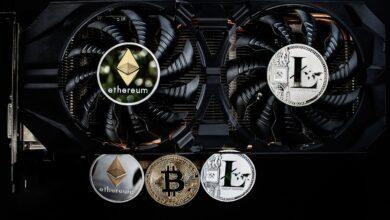

Build a rig around the Antminer S19 XP or a GPU setup with NVIDIA’s RTX 4090; these units define performance for SHA-256 and Ethash algorithms respectively. This hardware selection forms the foundation of your operation, directly impacting hash rate and extraction potential. My own initial setup, a cluster of RTX 3080s, consistently delivered 95 MH/s each before The Merge, a real-world data point that informed my current mining strategies. Without this comprehensive reference for component capabilities, accurately projecting profitability is impossible.
The core mechanism of cryptocurrency validation involves solving complex mathematical problems to add blocks to the blockchain. This process secures decentralized networks like Bitcoin and Ethereum, for which mining rigs earn rewards in the native digital currency. Understanding this is non-negotiable; it’s the economic engine of crypto mining. Today’s contemporary mining landscape demands an analytical approach to electricity costs, which can render even the most powerful ASIC unprofitable at a tariff above £0.22 per kWh.
This overview serves as a practical handbook for navigating the modern crypto environment. We will dissect the total cost of ownership for different hardware configurations and model rewards against UK energy prices. The analysis moves beyond theoretical concepts to provide a data-driven framework for assessing the genuine profitability of digital currency extraction.
Choosing Your Mining Hardware
Begin with the algorithm, not the coin. Your hardware decision is a direct response to the specific mathematical problem it must solve for block validation. For SHA-256, the Antminer S19 XP Hyd. (255 TH/s at 21.5 J/TH) is the industrial standard; its efficiency crushes older models like the S9, making their operation unviable on most electricity tariffs. For Ethash-based coins, even after Ethereum’s shift, the GPU rig remains relevant. A build with six NVIDIA RTX 3070s delivers roughly 360 MH/s, but its true value is algorithmic flexibility compared to a rigid ASIC.
Profitability is a direct calculation, not guesswork. Input your hardware’s hash rate, power draw (in watts), and local electricity cost (pence per kWh) into a mining calculator. For example, running an Antminer S19j Pro (100 TH/s at 3,050W) with electricity at 24p/kWh generates a daily loss. The same unit at 12p/kWh might yield a small profit, but that margin is entirely consumed by the hardware’s initial cost. Factor in network difficulty increases; a 10% monthly rise can halve your coin extraction rate in under six months.
A modern mining operation demands a data-driven approach. Consider these variables for your rigs:
- Hashing Power: The raw speed for solving blocks.
- Power Efficiency (J/TH or J/MH): The most critical metric for ongoing costs.
- Initial Investment: Hardware cost, PSU, cooling, and infrastructure.
- Acoustic Output: An S19 operates at 75 dB; unsuitable for a residential setting.
- Resale Value: GPUs often retain more value than a soon-to-be-obsolete ASIC.
For a decentralized digital currency like Monero, which uses the RandomX algorithm, CPU mining is a viable, egalitarian option. An AMD Ryzen 9 7950X can achieve ~22 KH/s, allowing participation without specialized hardware. This contrasts sharply with Bitcoin’s landscape, dominated by large-scale ASIC farms. Your hardware choice, therefore, is a bet on a specific blockchain’s future and your position within its mining ecosystem. The contemporary miner’s handbook is a spreadsheet, not a speculative wishlist.
Calculating Your Operational Costs
Your electricity rate is the single most critical data point. Mine at 15p/kWh and a rig drawing 1500W costs £1.80 daily, £54 monthly. At 35p/kWh, that figure soars to £126. Use your actual tariff, not an estimate, and monitor consumption at the wall with a smart plug. The contemporary mining operation lives or dies by this calculation, not just the upfront hardware cost.
Beyond power, factor in ancillary expenses. Pool fees, typically 1-3% of your rewards, directly chip away at gross income. If your internet connection is unstable, consider a redundant 4G backup; a dropped connection means immediate lost income. System maintenance, occasional part replacements like fans, and even the increased cooling load on your home’s HVAC during summer add measurable costs. This comprehensive view separates hobbyist dabbling from a structured extraction process.
To assess true profitability, subtract your total operational costs from your gross mining income. A rig generating £8 daily in crypto rewards with £4.50 in operational costs yields a net profit of £3.50. This data-driven analysis provides a clear reference point for judging the viability of your setup. The validation work your hardware performs for decentralized networks must be profitable after all real-world costs are accounted for. This handbook’s focus on operational math is essential for navigating the economics of blockchain validation.
Treat your mining rigs as a small business. The digital currency you earn is revenue; electricity, fees, and maintenance are your cost of goods sold. Your net profit, the actual fiat currency value after conversion, determines success. This framework transforms the activity from a speculative gamble into a calculated analysis of a digital enterprise, which is fundamental for sustained participation in today’s crypto networks.
Selecting Profitable Coins
Your hardware dictates your options. An ASIC miner, for example, is locked into a specific algorithm like SHA-256, making Bitcoin the primary target. For a contemporary mining operation using GPU rigs, your field is wider. You are not just mining a digital currency; you are providing a validation service for decentralized networks, and your rewards depend on the blockchain’s design.
The profitability of a cryptocurrency is a function of its market value, block rewards, and network difficulty. A modern approach requires a comprehensive overview of these metrics. Use a profitability calculator like WhatToMine or CryptoCompare, inputting your hardware’s hash rate and local electricity cost. This data-driven analysis is the core of this handbook. For instance, a rig of six RTX 3070 cards might show a net profit of £3.50 per day on Ethereum Classic but only £1.80 on Ravencoin, a difference entirely dependent on the coin’s current market price and the competition on its network.
Beyond Price: Understanding Algorithmic Efficiency
Do not fixate solely on the price of a coin. The extraction process for different algorithms varies in its demand on your hardware. Ethash, used by Ethereum Classic, is generally more memory-intensive, while KawPow, used by Ravencoin, places a heavier load on the core, leading to higher power consumption and wear. Your hardware’s efficiency with a specific algorithm directly impacts your net profitability. This contemporary reference point is essential for protecting your investment.
A Case for Niche Coins and Speculative Mining
While established networks like Bitcoin offer relative stability, smaller, decentralized projects can present unique opportunities. Mining a lower-difficulty currency in its early stages can yield a larger volume of coins, a speculative bet on its future value. This strategy carries higher risk but is a part of a sophisticated miner’s playbook. The digital asset landscape requires balancing immediate, calculable returns against potential long-term gains from a project’s success. Your mining operation is, fundamentally, a vote of confidence in that blockchain’s future.