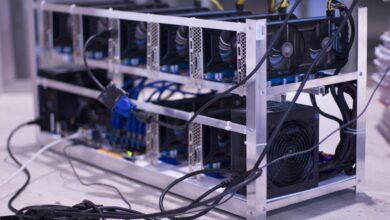

For most individuals in the UK, purchasing a retail mining rig is a fast track to a negative return. The financial viability of solo operations has evaporated for all but those with access to industrial-scale electricity contracts below £0.10 per kWh. My analysis of current network metrics–a hashrate exceeding 700 Exahashes/second and a mining difficulty at an all-time high–shows that a single modern ASIC miner, like an Antminer S19 XP, would likely generate less than £5 per day before power costs. At the average UK business electricity rate of £0.24 per kWh, the electricity bill alone would surpass that meagre income.
A proper cost-benefit analysis must extend far beyond the initial hardware investment. The core economics of mining hinge on a volatile trio: the bitcoin price, the network’s difficulty, and your operational expenditures. While rewards are fixed in satoshis, their sterling value fluctuates wildly. A 20% drop in BTC’s price can erase a month’s projected profit, while a 15% upward adjustment in network difficulty directly slashes your share of the cryptocurrency pie. This constant squeeze makes a static ROI calculation useless.
The only pragmatic path to profitability now involves a granular evaluation of financial costs and operational scale. My own analysis for a hypothetical UK-based operation considered colocation in Scottish data centres leveraging cheaper renewable energy, factoring in a 2.5% pool fee and a 3% annual hardware degradation in hashrate. The conclusion was clear: without a multi-million pound capital outlay to achieve economies of scale, the viability is marginal. The real investment is not just in silicon, but in relentless data-driven optimisation of every watt consumed.
Bitcoin Mining Economics: A Personal Cost-Benefit Evaluation
My analysis concludes that mining profitability now depends entirely on a granular, data-driven evaluation of your specific inputs; a generic ‘yes’ or ‘no’ is financially irresponsible. The core of this assessment is a simple yet unforgiving formula: your share of the global hashrate dictates your portion of the Bitcoin rewards, which must then exceed your operational costs. The primary variable you can control is your electricity cost, while the primary external pressure is the network difficulty.
The Hard Numbers: A UK-Based Case Study
Consider a single Antminer S19 XP (140 TH/s) running in a UK facility with an industrial electricity rate of £0.12 per kWh. At a network difficulty of 83 trillion and a Bitcoin price of £55,000, the daily reality is stark:
- Estimated Daily Revenue: ~£12.50
- Daily Electricity Cost: ~£10.37 (3.6kW * 24h * £0.12)
- Daily Gross Profit: ~£2.13
This leaves a slim margin to cover the hardware investment of £2,500-£3,000, pushing the ROI period beyond 3.5 years–a risky timeframe given the certainty of rising network difficulty.
Assessing Long-Term Viability
The financial viability of a mining operation hinges on its resilience to difficulty increases. A static analysis is useless. My own evaluation framework for any potential investment involves projecting these key metrics:
- Hardware Efficiency: Calculate your joules per terahash (J/TH); anything below 30 J/TH is now the baseline for viability.
- Cost Escalation: Model a 5-10% monthly increase in network difficulty. If your profit evaporates within 6 months under this model, the investment is untenable.
- Hedging Strategy: Factor in the opportunity cost of not simply buying Bitcoin outright with the capital earmarked for hardware and electricity.
The economics of cryptocurrency mining have matured into a professional industry. For an individual, the path to profitability is narrow, requiring a relentless focus on operational efficiency and a sober financial analysis that anticipates the continuous upward march of mining difficulty.
Calculating Your Break-Even Point
Calculate your electricity cost per kilowatt-hour (kWh) first; this is the most critical variable. For a rig drawing 3.3kW, operating in the UK at an average rate of £0.24 per kWh, your daily electricity costs are £19.01. Your hardware’s hashrate, for instance 110 TH/s, then meets the current network difficulty to generate a probable daily Bitcoin reward, which at today’s prices converts to a GBP value. The break-even point is the day when this daily GBP reward consistently exceeds your operational costs.
The Core Variables of Your Mining Equation
Your financial evaluation hinges on three data points: the upfront investment in hardware, the persistent operational costs (primarily electricity), and the projected mining rewards. A static analysis is useless; you must model rewards against a rising network difficulty. A 5% monthly increase in difficulty can slash your output by over 40% within a year. This dynamic makes a simple ROI calculation naive. Your cost-benefit analysis must project declining Bitcoin earnings against a potential appreciation of the cryptocurrency’s price, creating a complex financial model.
Building a Data-Driven Projection
Use a mining calculator, inputting your exact hardware hashrate and local electricity cost. Then, run the numbers with a conservative difficulty increase–7-10% monthly–and a flat Bitcoin price. This gives you a worst-case scenario timeline. For example, an initial £7,500 hardware investment might show a paper ROI in 14 months, but with rising difficulty, the actual point where cumulative earnings surpass total costs could stretch to 22 months. This assessment separates a speculative gamble from a calculated investment.
The final step is a sensitivity analysis. How does your break-even point shift if electricity costs rise by 15%, or if Bitcoin’s price drops by 20%? If these scenarios push your break-even beyond 24 months, the investment carries significant risk. This granular evaluation of costs against potential rewards is the essence of sound mining economics, transforming a hope-based operation into a data-driven financial operation.
Hardware and Electricity Costs
Your choice of hardware dictates the entire financial structure of your mining operation. Current-generation Application-Specific Integrated Circuit (ASIC) miners, like the Bitmain Antminer S19 XP or Whatsminer M50S, offer a hashrate between 110-140 TH/s with an electricity draw of roughly 3-5 kW. Purchasing one new will set you back £3,000-£4,500. Older models, such as the S17+, can be acquired for under £1,000 but operate at 50-60 TH/s for a similar power cost, making their long-term viability questionable against rising network difficulty.
The core of any mining evaluation is a relentless cost-benefit analysis focused on electricity. At a UK average electricity rate of £0.24 per kWh, a single S19 XP running 24/7 incurs a daily power cost of approximately £17.28. Compare this to a less efficient older unit that might cost the same or more to run for half the output. Your local electricity tariff is the single most critical data point; operations become financially unfeasible above £0.28-£0.30 per kWh with current Bitcoin prices and difficulty.
Mining profitability is a direct function of your hardware’s electrical efficiency, measured in Joules per Terahash (J/TH). Target units below 30 J/TH. A machine rated at 25 J/TH generates more potential rewards per unit of energy consumed than one at 40 J/TH. This metric, more than raw hashrate, determines your operational resilience. A financial evaluation must project these costs against the anticipated block rewards and the relentless upward trend of mining difficulty, which can erode your ROI projection by 10-15% per quarter.
Ultimately, the economics of mining hardware are a race against obsolescence. A machine’s ROI calculation is not static. Factor in a 6-12 month payback period as a best-case scenario, acknowledging that each difficulty adjustment and market dip extends this timeline. Your setup’s financial viability hinges on this dynamic between upfront capital expenditure on the hardware and the persistent, unforgiving variable of electricity costs.
Impact of Bitcoin’s Price
Directly tie your mining operation’s financial evaluation to a specific Bitcoin price threshold; for many UK-based setups, this currently sits above £45,000. Below this, the cost-benefit analysis often turns negative when accounting for UK industrial electricity rates averaging £0.18-£0.24 per kWh. The core financial analysis is simple: your hardware hashrate generates a fixed quantity of satoshis, but their sterling value is entirely dictated by the cryptocurrency’s market price. A 10% price increase can instantly transform a marginal operation into a highly profitable one, directly amplifying the value of your block rewards.
This price-to-profitability link is non-linear due to the network difficulty. A rising Bitcoin price incentivises more participants to deploy mining hardware, which in turn increases the network’s total hashrate and mining difficulty. This creates a financial feedback loop: your existing investment in hardware yields fewer coins over time unless the price appreciation outpaces the rising difficulty. Your ROI calculation must therefore be a dynamic model, not a static snapshot, projecting how future price movements could alter the competitive landscape and your share of the rewards.
For a robust assessment of viability, model your operation’s profitability against three price scenarios: a bear case (£30,000), a base case (£50,000), and a bull case (£75,000). This stress-testing reveals the sensitivity of your investment to market volatility. A mining operation that remains cash-flow positive at £30,000 after all electricity and operational costs possesses significant resilience. Conversely, a setup that only becomes profitable above £55,000 carries substantial financial risk, making its long-term viability heavily dependent on sustained market optimism.