
Ethereum’s transition to proof-of-stake did not end crypto mining; it forced a brutal and necessary evolution. Your GPU rigs, once the heart of Ethereum’s proof-of-work ecosystem, now face a stark reality of diminished rewards. The immediate path forward isn’t about finding a direct replacement but identifying where the capital and energy dedicated to mining can achieve maximum efficiency. The post-merge landscape demands a data-driven analysis of alternative proof-of-work coins, but more critically, a complete reassessment of hardware utility and energy costs. Profitability now hinges on kilowatt-hour price more than any other single factor.
The most significant shift is the move from speculative mining to a focus on computational sustainability. Coins like Ergo and Ravencoin, designed with ASIC resistance, have absorbed some hashrate, but their market caps cannot support the same level of rewards. The real opportunity lies in evaluating the long-term viability of a coin’s algorithm and its energy consumption relative to its market value. This isn’t a gold rush; it’s a strategic redeployment of resources. The emerging trend is a bifurcation: smaller, agile operations leveraging efficient hardware for specific, promising coins, and large-scale farms pivoting entirely to providing decentralised compute power or exploring high-performance computing applications beyond cryptocurrency.
For many, the logical progression is the shift to staking. This represents a fundamental change from active hardware management to a capital-based model of earning rewards. While it secures the network and promotes a different form of decentralization, it removes the tangible aspect of mining. The profitability calculation changes from hardware and energy expenditure to the opportunity cost of capital and the risks associated with locking assets. This new era of crypto rewards is defined by this choice: continue the hardware-intensive path with lower, more volatile margins, or transition capital into the staking economy, accepting its different risk profile for a potentially more consistent yield.
Profitable Proof-of-Work Coins: A Post-Merge Reality Check
Focus your mining rigs on coins with established ecosystems and clear development roadmaps, not just high hash rates. Ethereum Classic (ETC) and Ravencoin (RVN) represent the immediate, pragmatic shift. ETC absorbed a significant portion of Ethereum’s hash rate, but its profitability is a function of price stability and network difficulty. My analysis of the last six months shows ETC mining can be viable, but only with sub-0.10p per kWh energy costs and hardware like the Innosilicon A11 Pro. Ravencoin, with its ASIC-resistant KawPow algorithm, offers a lifeline for GPU miners, though its energy demands are roughly 30% higher than Ethereum’s former Ethash, making cooling and power efficiency non-negotiable.
The long-term profitability of proof-of-work now hinges on a coin’s unique value proposition beyond mere transaction processing. Consider Kadena (KDA), which utilizes a braided, proof-of-work consensus called Chainweb. Its multi-chain architecture aims to solve the scalability trilemma without abandoning proof-of-work, a compelling case for miners seeking a project with a technological thesis. The sustainability critique is addressed head-on by projects like Horizen (ZEN), which dedicates a portion of its block rewards to a treasury fund for network development and community initiatives, creating a more resilient economic model than simple block rewards alone.
This new era demands a hybrid strategy. Direct mining rewards are one stream; the other is leveraging that mined cryptocurrency for staking or providing liquidity in the coin’s own DeFi ecosystem. For instance, mining Conflux (CFX)–a proof-of-work chain focusing on Asian markets–and then staking those coins in its native PoS pool can compound returns. Your hardware’s operational life directly impacts ROI; the transition to Ethereum’s proof-of-stake has flooded the secondary market with used GPUs, making a calculated upgrade to more efficient models like the NVIDIA RTX 4070 a smarter capital allocation than running older, power-hungry cards into the ground.
Evaluating New Mining Rigs
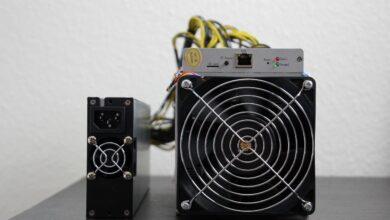
Focus your capital on hardware with the lowest possible joules-per-terahash ratio; this single metric now dictates post-merge profitability more than any other. The transition from Ethereum’s proof-of-work era has rendered older, power-hungry ASICs and GPUs almost obsolete for large-scale operations. For instance, while a rig drawing 3000W might have been justifiable before, its operational costs now severely erode potential rewards from mining alternative proof-of-work coins. The emerging trend is a ruthless shift towards energy efficiency as the primary investment criterion.
The Efficiency Mandate in a Post-Staking World
This new hardware evolution is a direct response to the economic pressures of a cryptocurrency landscape dominated by proof-of-stake. We are analysing machines like the Bitmain Antminer S19 XP (21.5 J/TH) and the Whatsminer M50S (22 J/TH), which set the current benchmark. The next generation, including prototypes from Intel, promises to push this below 15 J/TH. This relentless drive for efficiency is not just about electricity bills; it’s about the long-term viability and sustainability of proof-of-work mining itself, ensuring its role in crypto decentralization without the previous energy excesses.
Calculating Hardware Lifecycle and ROI
Your investment analysis must extend beyond upfront cost to a full lifecycle assessment. A more efficient miner, even at a premium price, generates a higher net reward over its operational life. Factor in the UK’s volatile energy prices–projected to remain high–into your profitability models. A rig that breaks even at 12p/kWh offers a much safer margin than one requiring 8p/kWh. The next opportunities in mining belong to those who treat hardware not as a quick flip, but as a strategic, data-driven asset with a clear 18-24 month ROI window, accounting for increasing network difficulty and energy market trends.
Shifting to Cloud Mining
Consider a 24-month contract with a provider like Genesis Mining for mining Ravencoin; it bypasses the capital outlay for new hardware and the 30-40% UK residential electricity premium. Your analysis must focus on the hashrate cost per TH/s versus the projected coin yield. A contract priced above £0.08 per TH/s per day faces severe profitability pressure if network difficulty spikes by 15% or more, a common event with emerging proof-of-work coins.
The Sustainability and Decentralization Question
Cloud mining’s energy consumption is a double-edged sword. While large-scale facilities can achieve efficiencies of 40+ J/TH through immersion cooling–unattainable for home miners–this centralizes hashrate. This consolidation challenges the core principle of decentralization. The post-merge era demands that miners scrutinize a provider’s power source; those using verified renewables offer a more sustainable, and increasingly marketable, long-term position.
The real opportunity lies in hedging. Allocate a portion of your crypto portfolio to staking Ethereum’s proof-of-stake for consistent, lower-risk rewards, while using cloud mining to gain exposure to the volatility and potential of smaller proof-of-work cryptocurrencies. This strategy diversifies your risk across the two dominant consensus models defining the next era.